
Overall, 1993 was a pretty good year. It still doesn’t touch the heights of 1991, which produced a ton of classic GOAT albums, and still the ones on this list are all outstanding. The top of the list contains three of the most important albums of all time. Oh, and for the first time: More than one female-led album is a GOAT. Nice.

20. 14 Shots to the Dome by LL Cool J. I recognize that most people hate this album, but I love the song, “Pink Cookies in a Plastic Bag Getting Crushed by Buildings.” People see this record as a failure to build on Mama Said Knock You Out … But that record was three years old at this point. It’s also viewed as a sign of success spoiling Todd Smith, which I get. He didn’t need rap at this point, and rap didn’t need him. It’s also seen as sexist and … Okay. Okay. It doesn’t belong on my best of list. But I still really like the song, “Pink Cookies in a Plastic Bag.”
20. The Bliss Album…? (Vibrations of Love and Anger and the Ponderance of Life and Existence) by PM Dawn. Okay, yeah, the album title is affected AF but it’s a good album featuring a hip hop version of The Beatles’ “Norwegian Wood.”
 19. Here Come the Lords by Lords of the Underground. In the early ’90s there was definitely a dominant sound space occupied by guys like Naughty by Nature and Onyx who featured hard, rough voices spitting bars that sounded like punches in the face. It all presaged the rise of DMX 10 years later. Lords played in that space, too. They never got a big hit, but this album is solid and actually pretty funny–especially when they drop the line about saying “hee hee” like Michael Jackson.
18. Reachin’ (A New Refutation of Time and Space) by Digable Planets. I think many remember this as “lite rap” or nerd jazz or a kind of Native Tongue spin off. All of that may be true, but Digables debut was looser. It’s very good…Although I admit that it’s not actually memorable. I dig it while it’s on and then can’t remember hearing it…
 17. SlaughtaHouse by Masta Ace Incorporated. This early album by Ace has some bangers: Jeep Ass Niguh (which later became a hit after being remixed as “Born to Roll”), the title track, Born to Roll, and Style Wars. The thing about Ace is that even when he was young and still figuring out what kind of rapper to be, he was never corny and his raps were always smart. The album is largely a response to what Ace appeared to see as the glorification of violence in the gangsta rap subgenre dominating the industry. “As I walk through Brooklyn, Compton or whatever/I wonder why black folks don’t wanna stick together/We talk about justice, and how little we get/Yet black men be killin’ black men for talkin’ shit…”
16. Patriot Games by Gunshot. An electrifying album unlike any other in the UK scene.
15. Inner City Griots by Freestyle Fellowship. Aceyalone, Myka 9, and Self Jupiter’s partnership on this album is hailed as a masterwork of craft. Aceyalone is your “favorite rapper’s favorite rapper,” and this album displays a wide variety of techniques. This can make it feel a little scattershot at times, but it’s still a GOAT. Soon after this album, Self Jupiter was arrested and the band had to go on hiatus.
 14. ’93 to Infinity by Souls of Mischief. There’s no reason why this shouldn’t have become a huge hit record. It’s weird. The rhymes are tight, the music is timely, the whole album flows together … Del the Funkee Homosapien did do a feature and produced most of the album, but the Souls were the less famous members of the Hieroglyphics crew: A-Plus, Opio, Tajai, and Phesto. I guess it just got overtaken by all the G-Funk flooding the market at the time. Retrospectively, it’s now viewed as a classic, with many artists spinning the title as tributes, e.g., Joey Bada$$’s, “’95 Til Infinity.”
13. Hand on the Torch by Us3. “Us3” was basically producer Geoff Wilkinson, who sampled legends from across the Blue Note catalog (Thelonius Monk, Herbie Hancock, Freddie Hubbard, etc.), gave them a boom bap backbeat, invited some Blue Note vocalists to rap over the tracks, and created a hip hop tribute to jazz. What made Us3’s jazz different from all the guys it sampled? Us3 won a grammy. Most of those jazz greats never did.
 12. Strictly 4 My N.I.G.G.A.Z… by 2Pac. Tupac’s first album was made in the shadow of his work with Digital Underground and it felt a lot like a Bay Area record. 2Pacalypse Now was still a great album, but it was here, in Strictly 4, that Tupac really found his own voice and vision. He still included Digital Underground on the breakout single, “I Get Around.” A great album, albeit not his greatest album.
11. Very Necessary by Salt N Pepa. People forget Salt N Pepa. Not sure why. But when they talk about the great rappers of the ’80s and ’90s they always talk about Monie Love (who had a fantastic debut but never did anything truly great after that), Queen Latifah (a strong presence but are her albums ones that you still return to today?), and TLC (fantastic and tragic, but more R&B than rap) … Very Necessary is why you should include Salt N Pepa on your shortlist of greats.
 The duo was well seasoned (pun intended) when they dropped Very Necessary (it would end up being their biggest album), still working with producer Luvbug–who had discovered the duo and was with them back to their ’85 roots and the song, “Push It.” You can hear their ’80s rap roots in their styles and interplay, and the brilliant use of recognizable ’60s soul samples makes them feel even more firmly rooted in history. Very Necessary won them a Grammy, and on the radio you couldn’t escape hits like Shoop, Whatta Man (featuring En Vogue), and None of Your Business.
10. Buhloon Mindstate by De La Soul. The group continues to evolve, now becoming even more jazzy and abstract. And fewer skits (but still too many). This was their last album with Prince Paul, and it pays tribute to the JB horns including many people who played with the hardest working man in show business. It’s basically a horn-driven boom-bap album. They also got the rights to a Michael Jackson sample. I can’t imagine how expensive that must have been. As I was revisiting this album for this article, it became my new favorite De La album.
9. Plantation Lullabies by Meshell N’Degeocello. It’s okay if you say this isn’t a rap album and think it shouldn’t be on the list. For me, though, it’s a perfect blend of hip hop, jazz, and soul. I first heard it on a college radio station in Berkeley and for the first time in my life I had to call the station and ask, “What the Hell is this and where can I buy it?” (Yeah, people bought CDs back then–music was something you held in your hand.)
8. Black Sunday by Cypress Hill. Many call this the band’s best album. It’s hard to disagree.
 7. Enta Da Stage by Black Moon. Wu-Tang Clan is the most famous rap posse of the ’90s, and sometimes people forget that Duck Down Records had its own collective, Boot Camp Clik, which spawned at least one of the best rappers of all time: Sean Price. And those who remember Sean Price often forget Buckshot, who was half of Black Moon and a true force in New York’s gritty underground scene. I’d actually say he’s just as good as Price.
Buckshot was the clear lead here, with 10 of the album’s 14 tracks being basically solo cuts by Buck. (The other two members of Black Moon were 5ft and DJ Evil Dee.) And the best part: No stupid skits. Just hardcore hip hop, beginning to end.
It’s criminal that this album didn’t sell even half as well as Enter the 36 Chambers. It’s also interesting that both of New York’s “supergroups” debuted with albums titled “Enter the…” Strongest cuts: Who Got the Props (which debuted before the album was recorded and was a minor hit), Black Smif-N-Wessun (the duo’s first appearance), How Many MCs, and I Gotcha Opin.
 6. Return of the Boom Bap by KRS-One. Return of the Boom Bap came after a KRS-One album that for some reason didn’t sell well despite being very good (Sex and Violence), and that preceded by a live one. Before, that, he dropped Edutainment, which I personally really liked but it’s definitely one of his weaker albums. Thus, we hadn’t had any hot, new material from KRS in several years. Then came Return and, yes, you can call it a come back. This album has his best post-BDP song (Sound of Da Police) and some great deep cuts as well (like the title track). It didn’t hurt that DJ Premier handled much of the production, along with Kid Capri and Showbiz.
Across his career, KRS-One has been responsible for some of the best and most important albums in the history of rap, and served as the foundation for conscious rap. He broke free from stereotypes and resisted the violence of the genre while maintaining status as one of the best battle rappers in the business. With Return, released ten years after his debut, he proved that he was still one of the best of all time.
 5. No Need for Alarm by Del the Funky Homosapien. Del’s debut was largely an accessible collection of songs, mostly humorous and good natured. With Alarm, Del’s soundscapes became much more eclectic and his rhymes less playful–and more dense. I think that is what makes most hip hop diehards to rate this album as his best (or second best after Deltron 3030). I won’t argue that point and instead I’ll say that it can go either way. Both Alarm and I Wish My Brother George Was Here are fantastic albums.
4. Black Mafia Life by Above The Law. This album was in the can back in ’91, before Dre’s Chronic even got a scheduled release date. Some idiot at Ruthless Records thought it wasn’t ready for release yet. Can you imagine if it had come first? I’m not saying it’s as good as Chronic–but I’m also not saying it isn’t. Cold 187um is clearly a better rapper than Dre, and the Doc himself oversaw production of ATL’s first album. Clearly there’s lots of connective tissue here.
1-3. Doggystyle by Snoop Doggy Dog, Enter the 36 Chambers by Wu Tang Clan, and Midnight Marauders by A Tribe Called Quest (Three-Way Tie).
 I thought this would be easy. It’s 1993, the year Wu Tang came on the scene and literally changed the face of rap forever.
When Wu Tang arrived, the rap scene had been claimed and taken by the West Coast (specifically, the L.A. region), and people were asking if New York had anything new to offer.
Answer: Yup.
The sound of the album was powerful and unprecedented. Sure, “dirty grit” had been bubbling up in NYC’s underground scene–especially within Duck Down records’ Boot Camp Clik (the Wu Tang’s independent, lesser-known competing collective), but had never been elevated to the main stage and had never sounded so “big.” Enter the 36 Chambers sounded like an arena concert and a back alley all at once. The fact that there were nearly a dozen lead vocalists contributed to the sense that it it was “big.” Never before had we seen such a broad cast of characters, each with a distinct voice and fascinating in their own right. It almost felt like a rap version of John Sturges’, “Magnificent Seven.” We all wanted to hear more from every single voice on the album.
 That was obviously the best album of 1993, right?
But then … Snoop Doggy Dogg, who had played a major role on last year’s best album, The Chronic, dropped what might have been the most anticipated rap album in the history of rap–and it exceeded the high expectations placed on it. Snoop showed that he could be a leading man not just a supporting player…Plus, the dude was SINGING. Or at least it felt like that. But he was also rapping at the same time. There were a select few artists doing something like this (e.g., Bones, Thugs and Harmony) but nobody did it so smoothly, seamlessly moving in and out. Since then, yeah, there’s been plenty of examples of sung-rap, but in 1992, if you sang instead of rapped, you were labeled R&B. And not only was he singing but he … kinda sounded drunk? This may not be a positive thing to say but would we have mumble rap if Snoop hadn’t blazed a trail for it? In short, Doggystyle was a perfect album.
And then there was Midnight Marauders.
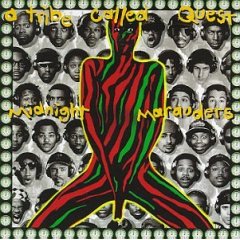 A Tribe Called Quest, like Snoop, was the most talked-about musical group in rap and then they went silent for an entire year after the 1991 release of Low End Theory. Taking over a year between albums is virtually unheard of today. It leaves money on the table. It gives the public time to forget you. And what would ATCQ even do on this album? Low End had been a pretty solid step forward from the band’s Native Tongue roots, bringing in overt jazz themes and giving a spotlight to Phife Dog. When they finally came back with Marauders, we got another new sound. Sure, it’s still heavy on jazz/boom bap, but the rappers have fully matured. There’s nothing “light” here (which was the tone of People’s Instinctive Travels and the Paths of Rhythm) and it doesn’t feel like experimental expansion (as in Low End). Marauders feels lived in. These are artists who know exactly what they’re doing, everything is controlled and deliberate, and they have something to say. It’s an album that feels like ATCQ’s fully realized destiny.
 It’s impossible for me to choose between these albums. Each, in their own way, had a huge impact . Each had a lasting impact for over a decade after 1992. I still listen to all of them regularly and there’s nothing “dated” about any of them.
So, this year I picked three #1 albums. My list, my rules.
Honorable Mentions:
- 19 Naughty III. Spawned the mega-hit, “Hip Hop Hooray,” and also had Written on Yeah Kitten and It’s On. Good, not great.
- Black Reign by Queen Latifah.
- Kill My Landlord by The Coup. Boots Riley’s debut.
- Lethal Injection by Ice Cube. This album had some really good songs, but lacked the heart of Cube’s earlier solo albums. He’s not hungry anymore, but he can still turn out the hits: Really Doe, Ghetto Bird, You Know How We Do It, and even the fairly derivative Bop Gun are all great songs. Lethal is on my list because I personally find it to be a classic–but if you disagree, I’m not going to fight you over it.
WORST RAP ALBUM OF THE YEAR
 There were a lot of bad rap albums in 1993. Shaquille O’Neal had a record for crissake. But none more epitomize 1993’s badness than the second albums by Kris Kross and Another Bad Creation. They tie for the worst because they prove that you can be a novelty act (bubble gum rap!) and get a SECOND album in 1993. That’s how much money the genre was starting to generate for labels.
Kriss Kross actually made it to album #3, but for ABC this was the end of their recording career.



You must be logged in to post a comment.